Drain Cleaning and Camera Inspection
How clogged and slow drains are cleared, and what a clog that keeps coming back says about the pipe beyond it.
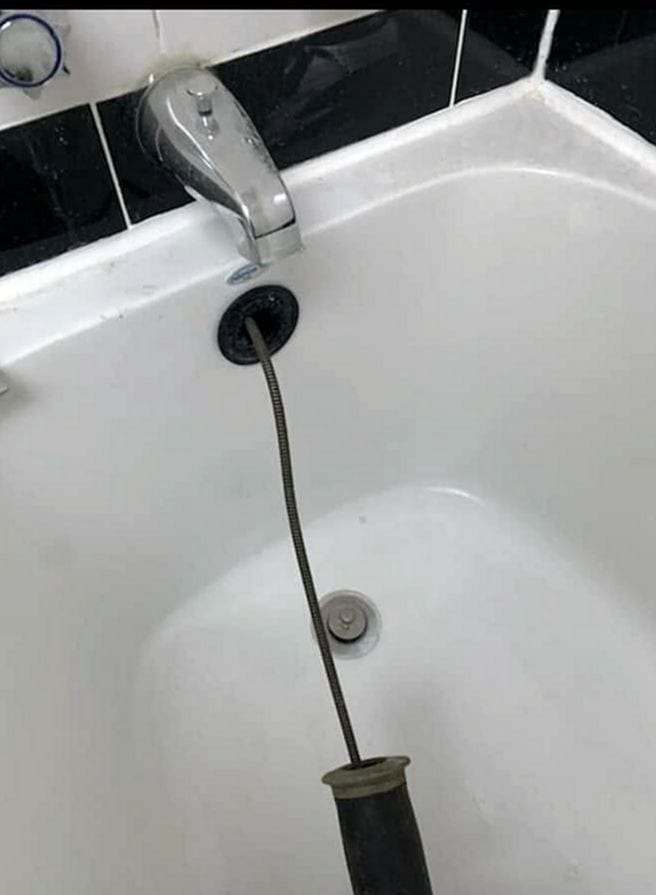
Most clogs sit close to the fixture: hair and soap in a tub or bathroom sink, grease and food scraps in the kitchen line, too much paper in a toilet. A hand cable fed through the drain, or through the overflow opening on a tub, reaches them without taking anything apart.
A clog in the main drain is a different job. Every fixture in the house drains into it, so when it blocks, water comes back up at the lowest opening first, usually a basement floor drain or a lower-level tub. Clearing it takes a larger machine fed in through a cleanout, and finding out why it blocked can take a camera.
Slow Sinks, Gurgling, Backups and Sewer Odor
What each warning sign usually means:
- A slow sink, tub or shower. Water stands before it drains: hair, soap or grease is narrowing the trap or the branch line.
- Gurgling. A drain or toilet bubbles when water goes down a fixture nearby: air is being pushed through a partial blockage, or the vent is blocked.
- Several fixtures backing up. A flush brings water up in the tub, or the washer floods the floor drain: the main line is blocked, not one fixture.
- Sewer odor. A smell from a floor drain that is rarely used can just mean its trap has dried out. A smell together with slow drains means waste is sitting in the line.
One slow fixture can usually wait for a booked visit. Several fixtures backing up cannot: stop using water in the house until the main line is open, or the next flush or load of laundry ends up on the basement floor.
Not sure whether the trouble is one drain or the main line? Try the Plumbing Troubleshooter.
Drain Cleaning Methods and the Drains Each Suits
| Method | Best for | Typical drains |
|---|---|---|
| Hand cable (drum auger) | Hair, soap and small clogs near the opening | Bathroom sinks, tubs and showers |
| Toilet auger | Paper, wipes or a small object caught in the toilet’s built-in trap | Toilets |
| Machine cable | Grease and paper clogs farther down the line, and cutting roots at a joint | Kitchen lines, laundry and floor drains, the main line through a cleanout |
| Hydro jetting | Grease and scale coating the pipe wall, and flushing root and sludge debris out of the line | Kitchen branch lines and main lines on sound pipe |
| Camera inspection | Finding why a line clogs again: roots, a sag, a crack or a joint that has shifted | Main drains and sewer lines |
Snaking, Hydro Jetting and Camera Inspection Compared
Cable Snaking
A spinning steel cable with a cutting head bores through the clog and drags part of it back out.
- Opens most clogs in a sink, tub, toilet or main line
- Gentle on older pipe when the cable suits the line
- Leaves grease and scale on the pipe wall, so some clogs return
Hydro Jetting
A hose with a rear-facing nozzle sprays water at high pressure and scours the full width of the pipe as it moves along.
- Strips grease, scale and root fragments off the walls
- Best on pipe in sound condition
- Not for cracked clay or badly rusted cast iron, which the pressure can make worse
Camera Inspection
A waterproof camera on a push cable shows the inside of the line, and a locator above ground marks its position and depth.
- Tells a cleaning problem apart from a repair
- Pinpoints where to dig if a repair is needed
- Works once the line is open and the water has drained
After we clear a main drain, a camera goes through it whenever the cause isn’t obvious: a cable can push past a root mass or a broken joint, and that clog comes back until the cause is fixed.
Scale, Grease and Roots: Why a Clog Comes Back
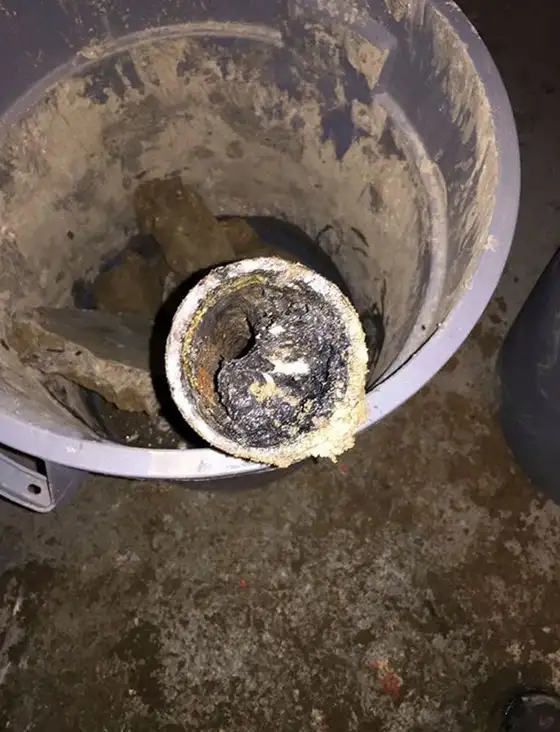
A clog that returns within weeks of a cleaning usually means the cause is still in the pipe. In older metal drain lines that is often scale: cast iron and galvanized pipe corrode inside until only a small opening is left, and grease, hair and paper catch on the rough wall.
Grease is the other usual cause in a kitchen line. It goes down warm, cools in the pipe and adds a layer each time. A cable punches a hole through it; jetting scrapes it off.
Roots and sags are pipe problems rather than clogs. Roots grow in through joints and cracks, and a sag, or belly, holds water and solids where the line has settled. Cleaning restores the flow for a while, but the lasting fix is a repair to the sewer line itself.
Mature Trees Over Old Clay and Cast Iron Lines
Many of Fort Wayne’s older neighborhoods combine big, mature trees with clay tile or cast iron sewer lines. Clay pipe comes in short lengths with a joint every few feet, and each joint is a way in for roots; cast iron cracks and rusts as it ages. In those houses, a main line that slows down again a season or two after a cleaning often has roots in it, and a camera shows whether they enter at one joint or all along the run.
What Belongs in the Trash Instead of the Drain
Each of these, flushed or poured, can start a clog:
- Grease, fat and cooking oil
- Coffee grounds
- Eggshells
- “Flushable” wipes
- Paper towels and tissues
- Dental floss
- Cotton swabs and cotton pads
- Tampons, pads and their wrappers
- Cat litter
- Rice and pasta, which swell in water
- Stringy peels in a garbage disposal
- Paint, solvents and motor oil
A garbage disposal does not change the list: it grinds food small, but grease, grounds and starches still settle in the line.
Drain Chemicals, Grease and Cleaning Before a Clog
Is it worth having a drain cleaned before it clogs?
For most drains, no: a drain that runs well needs nothing. The exception is a line with a known cause that cannot be fixed yet, such as roots growing into a clay sewer line. Cleaning that line on a schedule, before it backs up, keeps it working until it can be repaired.
Can grease go down the drain if hot water is running?
No. Hot water only carries the grease farther before it cools and sticks, which moves the clog from the trap you can reach to the line you cannot. Let grease cool in a can or jar and put it in the trash, and wipe greasy pans with a paper towel before washing them.
Do chemical drain cleaners damage pipes?
They can. Caustic and acid cleaners give off heat as they work, and when a drain is fully blocked they sit against the pipe, which is hard on old metal drain pipe, on plastic joints and on the seals in a garbage disposal. They also leave the water in the trap dangerous for whoever opens it next. A plunger or a hand cable is the safer first step.
Do enzyme drain treatments keep grease from building up?
They can slow a thin buildup in a line that still drains well, used regularly as the label directs. They do not open a clogged drain, and they do little against heavy grease or scale. Keeping grease out of the drain does more.
For a clog that is already there, call or send a request, and say which fixtures are slow and whether more than one is affected.