Plumbing Services in Fort Wayne
Drains, water heaters, leaks and repiping, sewer lines and fixtures: what each service covers and the signs that point to it.
A plumbing problem usually starts as something you notice: a sink that drains slowly, a stain on a ceiling, a shower that turns lukewarm halfway through. The work behind those signs falls into five services, covering the drains, the water heater, the supply pipe, the sewer line and the fixtures.
We work in single-family houses, older homes with galvanized or cast iron pipe, rental units and small commercial spaces in Fort Wayne and nearby communities such as Aboite, New Haven and Huntertown.
A Service for Each Part of the Plumbing
-
Drain Cleaning
Slow and clogged sinks, tubs, toilets and floor drains, and main lines that back up into the basement.
Learn More about Drain Cleaning -
Water Heaters
Tank and tankless heaters repaired or replaced, and sized to the household’s hot water use.
Learn More about Water Heaters -
Leak Repair & Repiping
Supply and drain leaks found and fixed, and repiping or a new water line when patching stops making sense.
Learn More about Leak Repair & Repiping -
Sewer Lines
The pipe from the house to the city connection: camera inspection, spot repairs and full replacement.
Learn More about Sewer Lines -
Fixture Installation
Faucets, toilets, sinks and garbage disposals repaired or replaced, and the rough-in for a bathroom remodel.
Learn More about Fixture Installation
Which Service Fits the Problem You Notice
Start from what you see, hear or smell: the likely service is where the work usually begins.
-
Kitchen or bathroom sink drains slowly
- Likely service
- Drain cleaning
- Page
- Drain Cleaning
-
Floor drain backs up when the washer empties
- Likely service
- Main drain clearing
- Page
- Drain Cleaning
-
Main line clogs again soon after each cleaning
- Likely service
- Sewer line inspection and repair
- Page
- Sewer Lines
-
Hot water runs out sooner than it used to
- Likely service
- Water heater repair or replacement
- Page
- Water Heaters
-
Water bill rises with no change in use
- Likely service
- Leak finding and repair
-
Pinhole leaks keep turning up on old pipe
- Likely service
- Repiping
-
Toilet runs or refills on its own
- Likely service
- Toilet repair or replacement
- Page
- Fixture Installation
-
Faucet drips after it is shut off
- Likely service
- Faucet repair or replacement
- Page
- Fixture Installation
If the problem fits none of these, start with the Plumbing Troubleshooter.
Telling Apart Problems That Look Alike
Is the clog in one drain or in the main line?
Look at what else is affected. A clog in one sink, tub or toilet usually sits in that fixture’s trap or branch line, and the rest of the house drains normally. When several fixtures slow down together, when a flush brings water up in the tub, or when the basement floor drain backs up as the washer empties, the blockage is in the main line. One fixture is drain cleaning; a main line that keeps clogging can lead to sewer line work.
Is a ceiling stain a leak in a supply pipe or in a drain?
Watch when it gets worse. A stain that darkens only after a shower, a bath or a flush upstairs points to a drain, a tub overflow or a toilet seal, because those carry water only when someone uses them. A stain that stays damp or keeps spreading while nothing runs points to a supply line, which is under pressure all the time. Either way it starts as leak repair, and in an older house the answer can include replacing a length of cast iron drain or galvanized pipe.
Is lukewarm water a water heater problem or a faucet problem?
Check more than one tap. If every faucet and shower runs lukewarm, or the hot water runs out sooner than it used to, start with the water heater. If one shower or faucet runs cool while the others run hot, the trouble is usually in that fixture, such as a worn cartridge or a shower valve’s temperature limit set too low, and that is fixture work rather than a new heater.
Is a slow kitchen sink with a disposal a drain problem or a disposal problem?
Listen to the disposal. If it hums without turning, or makes no sound at all, the disposal itself is the problem: it is jammed or worn out, and replacing it is fixture work. If it grinds normally but the sink still drains slowly, or water rises in the other bowl of a double sink, the clog is past the disposal in the drain line, and that is drain cleaning.
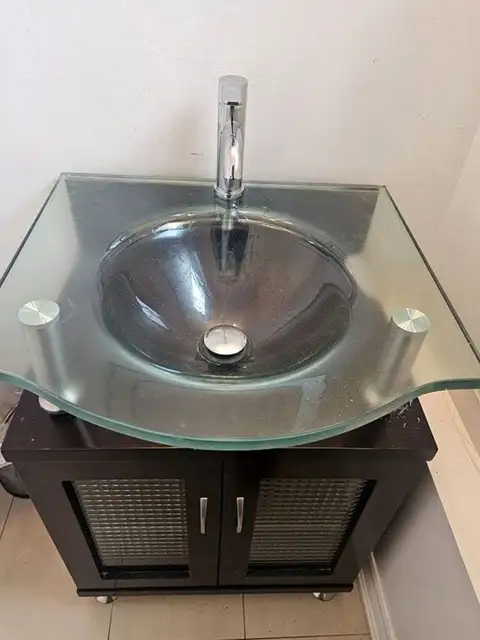
Tub Drain, Drain Stack, Slab Trench and Vessel Sink Work
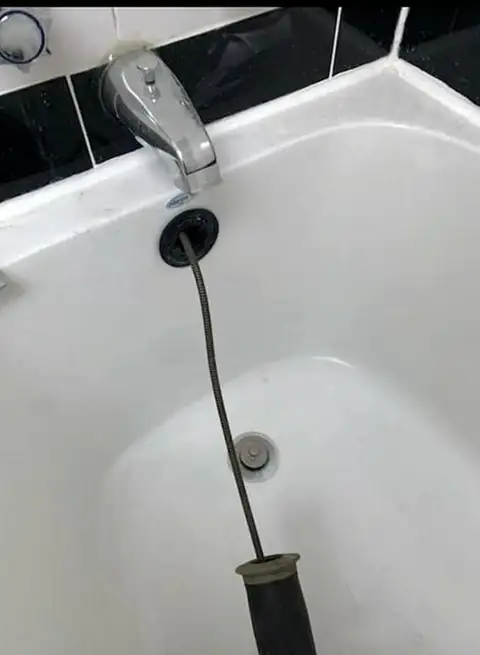
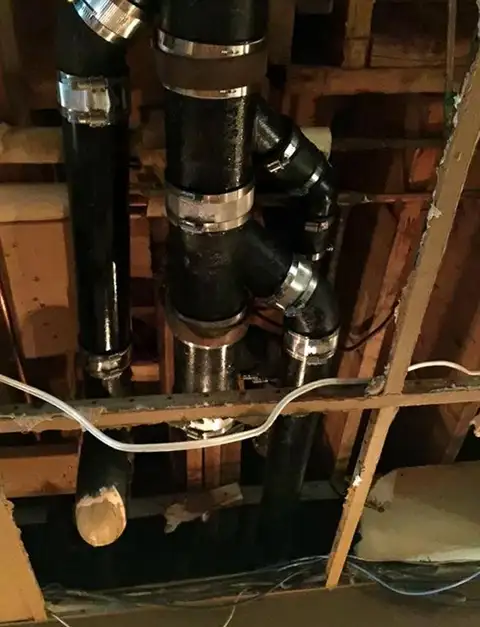
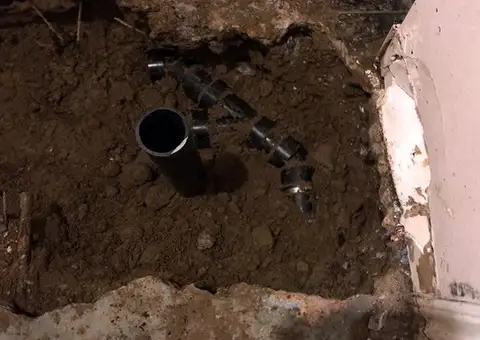
The work ranges widely: a drain cable fed through a tub overflow, a cast iron stack joined with no-hub couplings in an opened ceiling, new drain pipe laid in a basement slab, a glass vessel sink set on its vanity.
Another Repair or New Pipe
Many houses in Fort Wayne’s older neighborhoods still have some of their original plumbing: galvanized steel supply lines, cast iron drains and stacks, clay or cast iron sewer lines. Old pipe usually fails where nobody sees it, inside the pipe or under the ground, so after one repair the real question is whether the next failure is close behind.
When a Repair Usually Holds
One failure on pipe or equipment that is otherwise sound.
- A cracked fitting, a split from a freeze or a worn valve
- Pipe that looks clean and solid where it is cut open
- Good pressure and drainage everywhere else in the house
- A water heater or fixture with years of use left in it
When Replacement Makes More Sense
Failures that point to the whole run, not one spot.
- New leaks on the same run of pipe every few months
- Galvanized pipe narrowed by rust, with low pressure at several taps
- Cast iron cracked along its length or rusted through on the bottom
- A water heater leaking from the tank itself
- Walls or floors already open for a remodel
Age alone is no reason to replace pipe that still works. When the same material has failed twice in a year, though, the rest of it is often not far behind, and a planned replacement is easier on the house than a string of emergency repairs.
Whether it turns out to be a repair or a replacement, the first step is the same: call, or send a request describing what you notice.