Plumbing Troubleshooter
Choose what you are noticing at a drain, a faucet, a toilet or the water heater, and see what usually causes it, what is safe to check and when to call.
Most plumbing trouble gives some warning first: a sound, a smell, a slower drain or a damp patch. A symptom does not name its cause on its own, but it narrows the list to a few, and some of those can be checked safely in a few minutes, without tools. Past that point, the next step is a plumber.
Plumbing Symptom Finder
Choose a symptom, then press the button.
Gas Smell or Water Near Wiring
A rotten-egg smell near a water heater, a furnace or a gas line may be natural gas, not sewer gas. Leave the house without touching any switch and call the gas utility from outside. If water reaches a light fixture, an outlet or the electrical panel, keep clear of it: switch that circuit off at the panel only if you can reach the panel without standing in water, and otherwise leave that part of the house and call the electric utility.
Causes and Safe Checks, Symptom by Symptom
Each symptom comes with its usual cause, one check that is safe to make yourself, and the service that fits when the check does not settle it.
-
Slow Drain
- Common cause
- Hair and soap scum in a bathroom drain, or grease in a kitchen line. Several slow drains at once point to the main line.
- Check yourself
- Clean the stopper or strainer and try a cup plunger with the overflow covered. Skip chemical drain openers.
- Related page
- Drain Cleaning
-
No Hot Water
- Common cause
- A gas pilot that has gone out, a tripped breaker or a failed element on an electric heater, or a tank at the end of its life.
- Check yourself
- Look at the temperature dial and the breaker. Relight a pilot by the steps on the tank’s label, never with a gas smell in the room.
- Related page
- Water Heaters
-
Low Water Pressure
- Common cause
- A clogged aerator when one tap is weak; a partly closed main valve, a failing pressure-reducing valve or old galvanized pipe when every tap is.
- Check yourself
- Rinse the aerator, and make sure the main shutoff valve is fully open.
- Related page
- Leak Repair & Repiping
-
Running Toilet
- Common cause
- A worn flapper, a fill valve that does not shut off, or a float set too high.
- Check yourself
- Lift the lid. Water spilling into the overflow tube points to the float or the fill valve; food coloring that reaches the bowl without a flush points to the flapper.
- Related page
- Fixture Installation
-
Gurgling Drains
- Common cause
- A partial clog in the main line, a blocked roof vent, or roots in an older clay or cast iron sewer line.
- Check yourself
- Note which drain gurgles and what was draining at the time, and pour water into drains that are rarely used.
- Related page
- Drain Cleaning
-
Water Stains
- Common cause
- A leaking supply line or drain in the wall or ceiling, a failing toilet seal on the floor above, or condensation on cold pipes.
- Check yourself
- Turn off every tap and water appliance and watch the water meter. If it still moves, water is leaking somewhere.
- Related page
- Leak Repair & Repiping
-
Sewer Smell
- Common cause
- A dry trap in a little-used drain, a failed toilet wax ring, a loose cleanout cap or a cracked sewer line.
- Check yourself
- Pour water into floor drains and little-used fixtures, and check that the cleanout caps are in place and tight.
- Related page
- Sewer Lines
Finding the Part That Keeps a Toilet Running
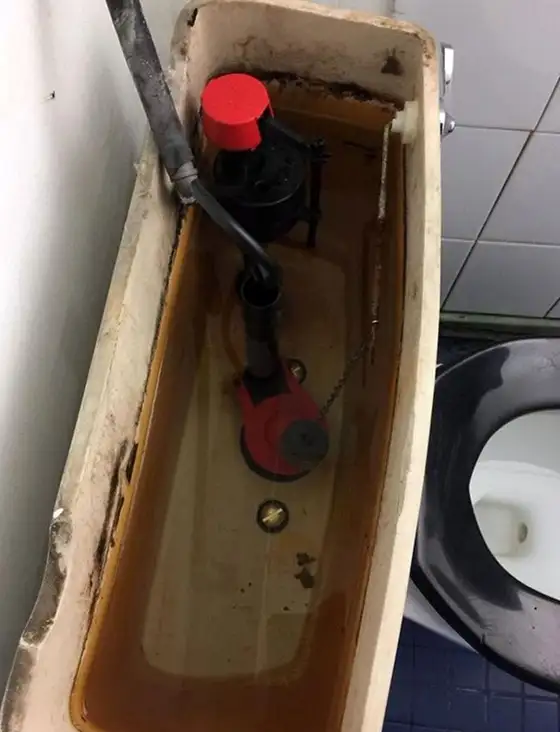
A toilet that refills on its own between flushes, or hisses without stopping, has a part inside the tank that is not sealing or not shutting off. Three parts do the work: the flapper at the bottom of the tank, which holds the water in; the fill valve, which refills the tank after a flush; and the float, which tells the fill valve when to stop.
Lift the lid and find the overflow tube, the open pipe standing in the middle of the tank. If water is spilling into it, the float is set too high or the fill valve is not closing. If the water sits below the top of the tube and the tank still refills now and then, the flapper is leaking: a few drops of food coloring in the tank that show up in the bowl without a flush confirm it.
Flappers and fill valves are standard parts that fit most toilets. Corroded tank bolts, a cracked overflow tube or a shutoff valve that will not close turn a quick part swap into a bigger job, and that work is part of fixture installation.
Plumbing Sounds and What Usually Causes Them
Many plumbing problems make a sound before anything shows:
- Banging when a faucet or an appliance shuts off: water hammer, from a valve closing fast; loose pipe straps and high water pressure make it louder.
- Hissing from a toilet between flushes: water slipping past the flapper, or a fill valve that does not shut off.
- Whistling while a faucet runs: a worn washer or cartridge, or a valve on the line that is only partly open.
- Rumbling or popping from the water heater: sediment on the bottom of the tank, with water trapped under it boiling as the burner or element heats.
- Running water with every tap off: a leak, a running toilet or a dripping relief valve. The water meter settles it: if its dial moves while nothing is on, water is going somewhere.
Low Pressure at One Tap or at Every Tap
Northeast Indiana water tends to be hard, so mineral buildup is behind many weak faucets and showerheads, though not every drop in pressure.
Why is the water pressure low at one faucet but fine everywhere else?
Start with that faucet. The aerator, the small screen screwed into the tip of the spout, catches grit and mineral scale, and a clogged one cuts the stream to a trickle while every other tap runs normally. If a clean aerator does not help, check that the shutoff valve under the sink is fully open, then look at the faucet’s cartridge, which can clog or wear inside.
What does it mean when the pressure drops at every tap at once?
A drop everywhere points to the supply rather than the fixtures. Check that the main shutoff valve is fully open, then ask a neighbor whether their water changed too. If it did, the cause is probably on the water utility’s side, and the utility is the one to call. If it is only your house, the usual causes are a failing pressure-reducing valve, old galvanized pipe narrowed by rust, or a leak somewhere on the line.
Can hard water lower the pressure in the whole house?
Over the years, yes, in an older house with galvanized steel pipe: rust and scale build up inside it until the opening is a fraction of its first size. Copper and plastic pipe hold up far better, so in a newer house hard water shows up at aerators, showerheads and the water heater rather than as a loss of pressure everywhere. When an older house has lost pressure slowly and clean fixtures do not bring it back, the pipe itself is usually the problem, and repiping is the fix that lasts.
How do I clean mineral buildup out of an aerator or showerhead?
Unscrew the aerator by hand, or with pliers wrapped in a cloth so they do not scratch the finish, and take the showerhead off its arm. Soak the parts in white vinegar until the scale softens, scrub the openings with an old toothbrush, rinse them, and put them back with the washers in the same order. A showerhead that will not come off can soak in a plastic bag of vinegar tied around it. On brass or dark finishes, check the maker’s care notes first, since vinegar can dull them.
Checks Better Left to a Plumber
Some checks look simple and are not. Stop and call rather than:
- Opening a cleanout cap on a line that is backed up: the sewage behind it can come out with force.
- Running a rented power auger through old cast iron or clay pipe, where the cable can snag or break the pipe.
- Lifting the lever on an old water heater’s relief valve: a valve that has not moved in years may not seal again.
- Opening a wall or a ceiling to chase a leak before you know where the water is coming from.
- Taking apart gas controls or electrical connections on any appliance.
Write down what you noticed and what you have already tried, and mention it when you call or in the request, so the plumber knows what has been ruled out.