Sewer Line Inspection, Repair and Replacement
How a failing sewer line is found, what usually damages it, and how a spot repair, a liner and a new line compare.
The sewer line, or lateral, carries everything from the house’s drains out to the public sewer main. In many older Fort Wayne neighborhoods it is clay tile or cast iron, laid long ago under lawns shaded by mature trees whose roots work their way into its joints. When the line starts to fail, the lowest drains in the house show it first, and no amount of snaking one drain keeps them clear for long.
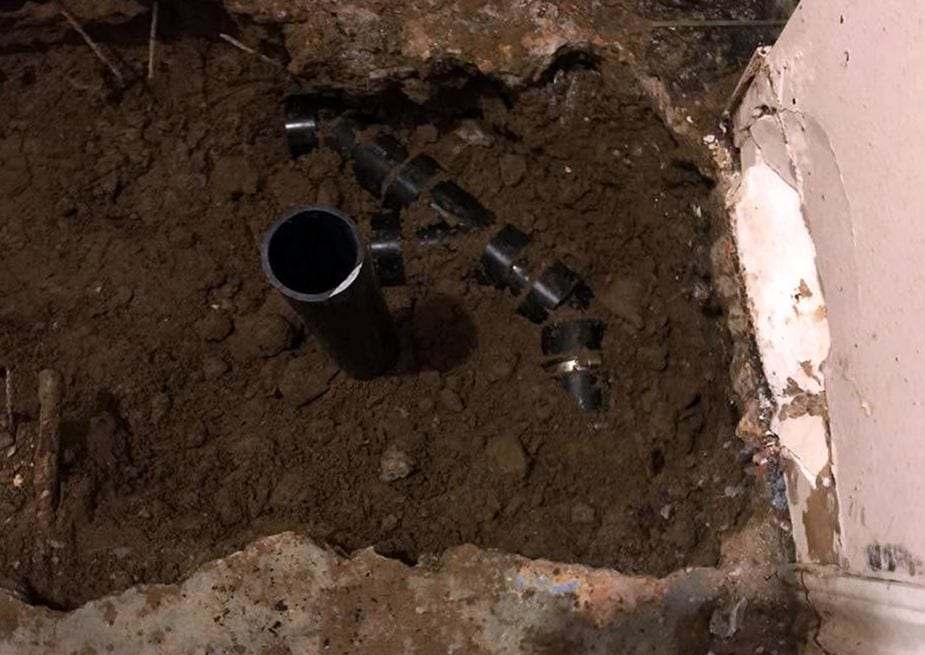
In a house with a basement, the line often runs under the floor slab before it leaves the foundation, so the failed section can be indoors as well as under the yard. Finding exactly where it is, and what is wrong there, comes before any decision about digging.
Signs the Sewer Line Itself Is Failing
A single slow sink is usually a clog in that sink’s own drain. These signs point further down, to the line that every drain in the house empties into:
- Several drains slow at once, the lowest ones first: a basement shower, a tub, the floor drain.
- A sewage odor in the basement or the yard, often after laundry or several showers in a row.
- Wet or sunken spots in the yard along the line’s path, or a stripe of grass greener than the rest.
- Backups in the basement floor drain when the washer empties or someone upstairs flushes.
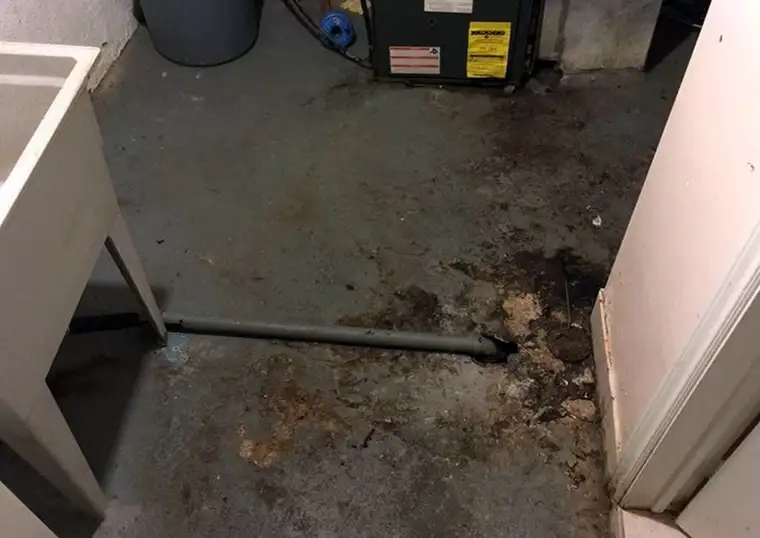
The floor drain is usually the lowest opening in the house, so a blocked or broken line shows itself there first. Gray water with a sewage smell rising around it means the water cannot get past some point between that drain and the street, and every flush or load of laundry adds to what comes up. Stop running water until the line is open again; a backup that keeps rising is a plumbing emergency.
A line that clears after a cleaning and backs up again some weeks later usually has roots, a sag or a break in it. Cleaning it once more and waiting tells you nothing new. Looking inside the pipe does.
Locating the Damage With a Sewer Camera
A sewer camera is a small waterproof camera on the end of a stiff, flexible cable, pushed into the line through a cleanout, the opening left by a pulled toilet or the roof vent. The video shows what the pipe is made of and what is wrong with it: roots at the joints, a crack, a stretch where water stands instead of running, a break with soil showing through. A fully blocked line may need to be opened first so the camera can pass.
Most camera heads carry a small transmitter. A locator held above ground picks up its signal, so the problem spot can be marked on the lawn or the driveway along with how deep it lies. That mark decides how much ground has to be opened, and whether the repair can be one small hole instead of a trench.
What Usually Fails in an Older Sewer Line
In older clay and cast iron lines, the camera usually finds one of these:
-
Tree Roots
- What it looks like
- Hair-fine roots or thick root masses at the joints of clay tile, and drains that slow down again some weeks after each cleaning.
- Usual fix approach
- Cutting the roots clears the line for a while. A lasting fix seals the joints they come through: a liner, or a new section where the joints are worst.
-
Bellied Pipe
- What it looks like
- A sag where water stands in the line and paper and grease settle, with repeat clogs at the same distance from the cleanout.
- Usual fix approach
- Cleaning only buys time. The low section is dug up and relaid on a steady slope; a liner follows the sag, so it does not fix one.
-
Collapsed Clay Tile
- What it looks like
- Broken or missing pieces of pipe, soil inside the line and a camera that cannot pass; sewage may surface in the yard.
- Usual fix approach
- The collapsed section is dug out and replaced: a spot repair when the rest of the line is sound, a new line when the clay is cracked along its length.
-
Corroded Cast Iron
- What it looks like
- Rough scale and rust narrowing the pipe, and cracks or holes along the bottom where the iron has worn through.
- Usual fix approach
- Descaling brings back the flow in pipe that is still sound. Pipe that has worn through is lined or replaced, often under the basement floor, where the house drain runs.
Spot Repair, Trenchless Lining or Full Excavation
Once the camera has shown what is wrong and where, the repair is one of three kinds, or a mix of them. Each has its place:
Spot Repair
One short section is dug up and replaced where the camera found a break, a sag or a root-filled joint.
- Fits a line that is sound on either side of the damage
- One small excavation instead of a trench
- Leaves the rest of the old pipe as it is
Trenchless Lining
A liner soaked in resin is pulled or turned inside out into the old pipe and cured in place, forming a new pipe inside it.
- Needs a pipe the liner can pass: no collapse, no deep sag
- Driveways, slabs and plantings over the line usually stay
- The line is cleaned and inspected first, and the liner narrows it slightly
Full Excavation
The old line is dug out along its length and new pipe is laid on a steady slope, joined at the house and toward the main.
- The answer for collapsed pipe and deep sags
- Corrects the slope, which a liner cannot
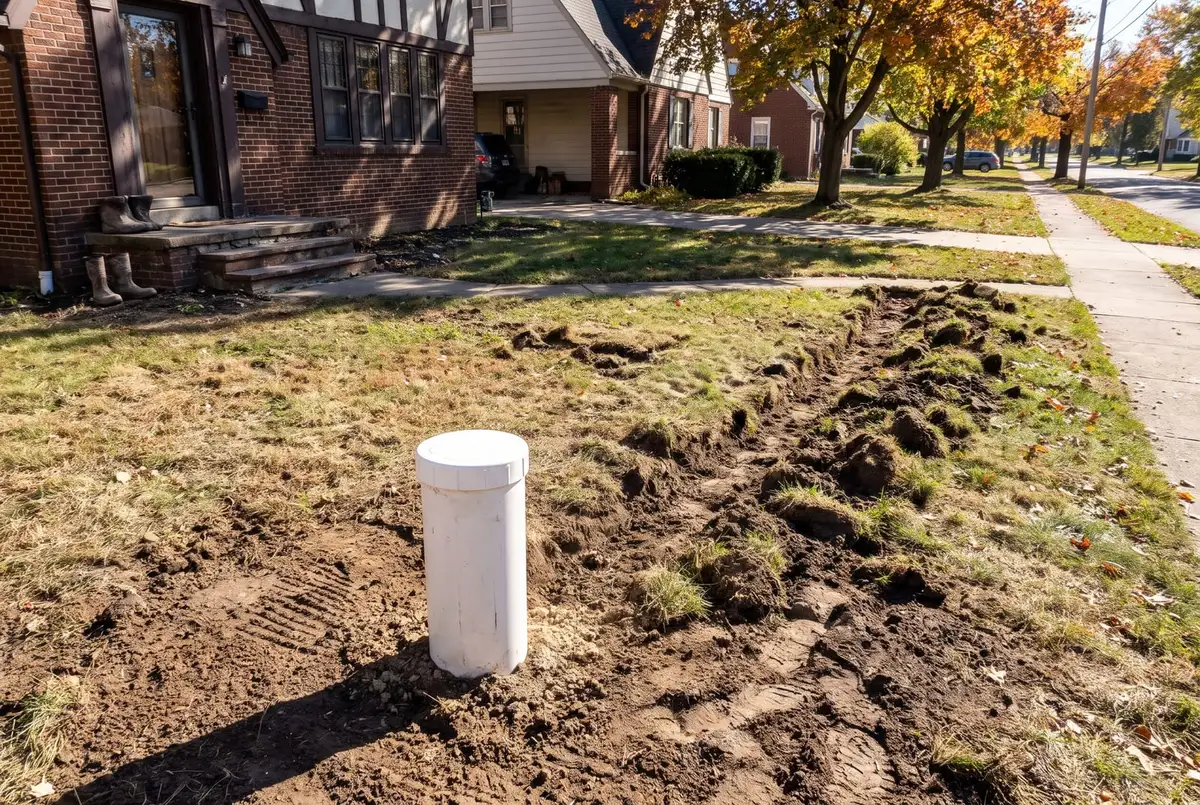
- The most digging, and the most lawn and pavement to put back
Lines that are bad in one place and fair elsewhere often get a combination: a spot repair at the worst joint and a liner through the rest, or a new line under the yard joined to sound pipe under the house. Whatever the method, a trench should be backfilled and compacted in layers, since loose fill settles and leaves a dip over the line by the next spring.
Sewer Repair Scope Guide
Length, depth, the ground over the line, the repair method and the permit each push the size of a sewer job up or down.
Choose what you know about your sewer line, then press Explain the Scope.
Where the Homeowner’s Line Ends and the City’s Begins
Who is responsible for a sewer repair depends on where along the line the damage sits, and the dividing point is not in the same place everywhere.
Which part of the sewer line does the homeowner own?
Usually the lateral: the pipe that runs from the house’s drains out toward the public sewer main. Where the owner’s part ends and the utility’s part begins varies from place to place. It may be the property line, a cleanout near the curb or the connection at the main itself, so the city or the sewer utility that serves the street is the one to confirm it for your address.
What if the camera finds the damage near the street?
The locator marks the spot and its depth on the surface, and the video shows what is wrong there. With both, the sewer utility can say whether that point falls in its part of the line. In many places the owner’s lateral runs under the sidewalk and sometimes under the street as well, so damage near the curb is not automatically the utility’s to repair.
How can I tell whether a backup comes from the city main or my own line?
From inside the house, often you cannot. A main that backs up tends to affect several houses on the street at once, often during heavy rain, while a problem in a lateral usually affects one house. Asking the neighbors is a quick first check; a camera inspection of your own line settles it.
Is the cleanout in my yard part of my line or the city’s?
A cleanout between the house and the property line is usually part of the owner’s lateral: it is there so the line can be reached for cleaning and inspection. Some places add a second cleanout near the curb that marks the dividing point. If you are not sure which one you have, the sewer utility can tell you.
Marking Buried Utilities Before Any Digging
Dialing 811 reaches Indiana 811, the state’s call-before-you-dig service, which has the utilities with buried lines nearby (gas, electric, water, communications) mark them with paint or flags before anyone digs. A sewer trench, a spot repair and the access pit for a liner all count as digging, and the request usually comes from whoever does the digging. A few working days’ notice is typical; check the current notice period with Indiana 811. The marks show the utilities’ own lines, so private ones, such as a gas line to a detached garage or a lawn sprinkler system, need their own care.
Before any digging starts, the job is set out in a written estimate: the method, where the ground will be opened and how far the work runs.